
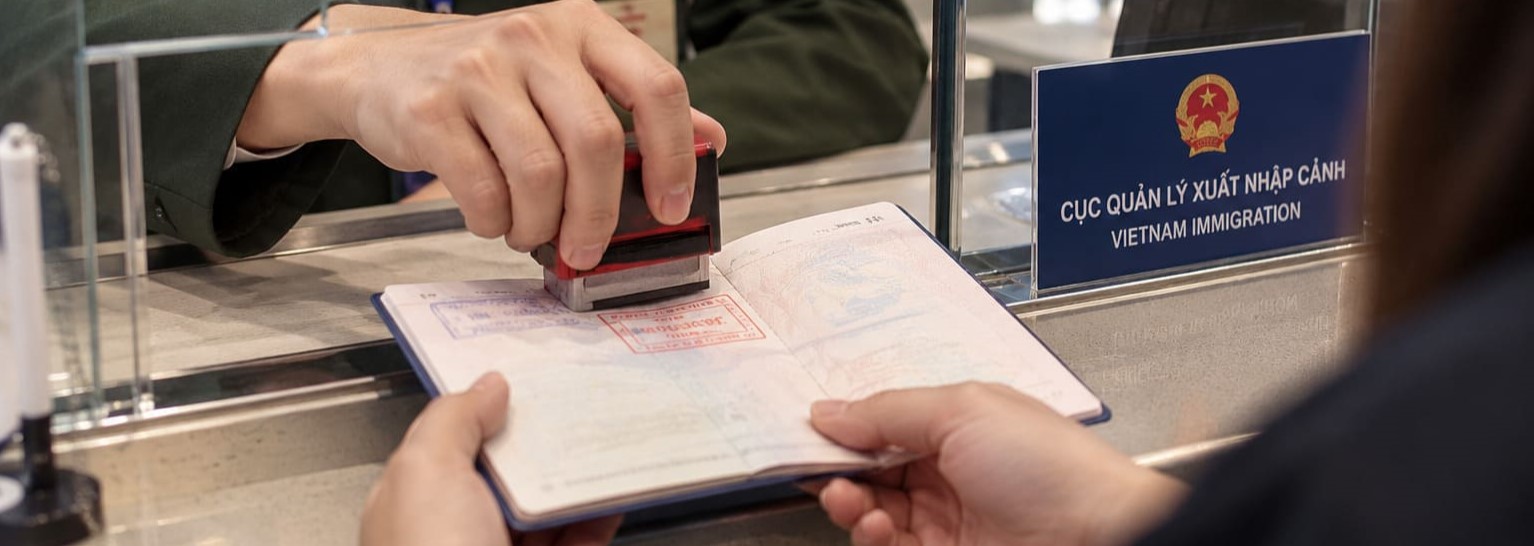
Most foreign travelers need a visa to enter Vietnam unless their passport qualifies for one of Vietnam’s visa exemption programs. This guide covers everything you need to know about getting a Vietnam visa in 2026.
Do You Need a Visa to Enter Vietnam?
You do not need a visa if your nationality is covered by one of Vietnam’s visa exemption policies and your trip is shorter than the permitted stay. Around 39 nationalities currently qualify, with stays ranging from 14 to 90 days depending on the passport.
|
Nationality group |
Visa-free stay |
|
Germany, France, Italy, Spain, United Kingdom, Russia, Japan, South Korea, Denmark, Sweden, Norway, Finland |
45 days |
|
Belgium, Bulgaria, Croatia, Czechia, Hungary, Luxembourg, Netherlands, Poland, Romania, Slovakia, Slovenia, Switzerland |
45 days (tourism) |
|
Cambodia, Indonesia, Laos, Malaysia, Myanmar, Singapore, Thailand |
30 days |
|
Philippines |
21 days |
|
Brunei |
14 days |
|
Belarus, Kazakhstan, Kyrgyzstan, Mongolia |
30 days |
|
Chile |
90 days |
|
All foreign passport holders visiting Phu Quoc Island only |
30 days |
There are two points travelers often miss.
- Being in the Schengen Area does not automatically make you visa-exempt: citizens of countries such as Austria, Greece, Ireland and Portugal still need a visa.
- Citizens of the United States, Australia, Canada and India are not on any exemption list and must get a visa before they travel.
The old rule requiring a 30-day gap between two visa-free entries has been removed for the 12 countries under Resolution 44/NQ-CP, so you can leave and re-enter on a fresh 45-day exemption. If your trip is longer than your exemption allows, apply for an e-visa instead.
See the full list and entry conditions in our Vietnam Visa Exemption guide.
Vietnam Visa Types at a Glance
The right visa depends on why you are coming and how long you plan to stay. Short tourist and business trips are covered by the e-visa, while working, investing or living in Vietnam requires a sponsored visa or a residence document.
|
Visa type |
Code |
Purpose |
Maximum validity |
How to get it |
|
E-visa |
EV |
Tourism, family visits, short business trips |
90 days, single or multiple entry |
Online, before travel |
|
Tourist visa |
DL |
Tourism |
90 days |
Approval letter (visa on arrival) or embassy |
|
Business visa |
DN1, DN2 |
Working with a Vietnamese company or organization |
12 months |
Sponsored by a Vietnamese company |
|
Work visa |
LĐ1, LĐ2 |
Employment in Vietnam |
2 years |
Sponsored by employer, with work permit or exemption |
|
Investor visa |
ĐT1 to ĐT4 |
Investing in a Vietnamese business |
Up to 5 years, depending on investment level |
Sponsored by the invested company |
|
Temporary Residence Card |
TRC |
Long-term stay for workers, investors and family members |
Varies by visa category |
Applied for in Vietnam |
|
5-year visa exemption certificate |
— |
People of Vietnamese origin and their spouses and children |
Up to 5 years |
Embassy abroad or Immigration Department in Vietnam |
If you are visiting for a holiday or a short business meeting, the e-visa is almost always the best choice.
For a detailed breakdown of every category, refer to Visa Types, or go straight to Vietnam Tourist Visa, Vietnam Business Visa and Vietnam Temporary Resident Card.
Vietnam Visa Requirements & Essential Checklist
1. Standard E-Visa Requirements
To prepare a smooth standard e-visa application, ensure you have the following basic documents:
-
Valid Passport: Must be valid for at least six months from your intended entry date.
-
Passport Scan: A clear scan of your passport’s photo page (make sure all four corners and details are visible).
-
Passport Photo: A recent passport-style photo (4×6 cm, white background, no glasses).
During the process, you will be asked to provide your intended entry and exit dates, the border gate where you will enter Vietnam, your temporary address in Vietnam, and the clear purpose of your trip.
2. Business, Work & Investor Visas
If you are applying for specialized categories, extra sponsorship documents are required:
-
Business & Investor Visas: Require extra documents from your sponsor in Vietnam, such as the company’s business registration.
-
Work Visas: Require a valid work permit or official proof of exemption from your sponsor.
3. Common Application Pitfalls & Errors
From the applications we handle, the most common problems are not missing documents but small, easily overlooked errors that can delay or block an application:
-
Photo issues: Submitting a photo with shadows or wearing glasses.
-
Scan issues: A passport scan that cuts off the machine-readable zone (MRZ).
-
Data mismatches: Entering a name that does not exactly match the passport.
According to our internal data, over 35% of delayed applications stem from invalid photo specs or cut-off passport scans.
💡 Pro Tip Before Applying:
Check the full checklist in Vietnam Visa & Entry Requirements and review specific photo rules in Vietnam Visa Photo Guidelines before submitting your application.

3 Ways to Get a Vietnam Visa
In practice, a Vietnam visa for foreigners can be obtained in three ways: apply for an e-visa online, get a visa on arrival at the airport, or apply at a Vietnamese embassy or consulate. For most travelers, the e-visa is the fastest and cheapest.
1. Apply for a Vietnam E-Visa Online
Since 15 August 2023, the Vietnam e-visa has been available to citizens of all countries and territories, for single or multiple entry, for up to 90 days.
You can apply yourself on the official government portal: simplevietnamvisa.com
-
Step 1: Fill in the application.
Enter your personal details, passport information, travel dates, entry border gate and address in Vietnam.
-
Step 2: Upload your documents.
Add your passport photo page scan and portrait photo.
-
Step 3: Pay the fee.
Pay the government fee by card.
-
Step 4: Receive and print your e-visa.
Download the approved e-visa as a PDF, print it and carry it with your passport.
2. Get a Visa on Arrival
Visa on arrival is still available in 2026, but only for travelers flying in. Before departure, you obtain a visa approval letter issued by the Vietnam Immigration Department through a licensed agency.
When you land, you present the letter at the visa counter and pay a stamping fee in cash: USD 25 for single entry or USD 50 for multiple entry.
-
Applicable Locations: It works at eight international airports: Tan Son Nhat (Ho Chi Minh City), Noi Bai (Hanoi), Da Nang, Cam Ranh, Cat Bi, Lien Khuong, Can Tho, and Phu Quoc.
-
Limitations: It cannot be used at land borders or seaports.
Learn how it works in Vietnam Visa On Arrival Application and Vietnam Visa Approval Letter.
3. Apply at a Vietnamese Embassy or Consulate
You can still apply in person at a Vietnamese embassy or consulate in your country.
This route usually takes longer and requires an appointment, so it mainly suits travelers who need a visa type the e-visa does not cover. Find your nearest mission in Vietnamese Embassies and Consulates.
Processing Time & Urgent Options
| Service | Processing Time & Cut-off Details |
| Standard Processing | 5-7 Working Days |
| Urgent 3 Days | Mon-Fri, 18:00 |
| Urgent 2 Days | Mon-Fri, 18:00 |
| Urgent 1 Day | Mon-Fri, 18:00 |
| Urgent 4 Hours | Mon-Fri, 12:00 or 18:00 |
| Emergency 2 Hours | Mon-Fri, Within 2 Hours |
| Emergency 1 Hour | Mon-Fri, Within 60 Minutes |
| Weekend Emergency Visa | Sat-Sun, 18:00 |
Staying Longer: Extension, Change of Visa Type and Overstay
If you want to stay beyond your visa or exemption, act before it expires. Depending on your visa type, you can:
- Apply for a new e-visa from outside Vietnam;
- Extend your stay, if you have a sponsor in Vietnam;
- Change to another visa type, for example from a tourist visa to a work visa;
- Leave and re-enter, on a new visa or an exemption.
These options are compared in Vietnam Visa Extension and Changing Type of Visa in Vietnam
Important: Staying past your permitted date is an administrative violation. It leads to fines, may require an exit visa and can affect future entries.
Why Apply Through Simple Vietnam Visa
Simple Vietnam Visa is a private visa service company, not a government website. You can always apply for an e-visa yourself at evisa.gov.vn.
Travelers choose us when they want:
- A specialist to check their application before submission;
- A visa faster than standard processing allows;
- Someone to contact if something goes wrong, such as an error on an issued e-visa;
- Transparent pricing, with the service fee shown separately from the government fee.
Whether you are applying for the first time, dealing with an urgent situation, or unsure which visa type suits your trip. Our team is available 24/7 to assist with any visa-related query, from standard applications to emergency processing.
- Phone/WhatsApp: (+84) 856 598 868
- Email: info@simplevietnamvisa.com
Frequently Asked Questions
Up to 90 days. You choose the validity period and whether it is single or multiple entry when you apply
No. Your e-visa is valid from the start date printed on it. You can enter on any day between the start and end dates, but not before.
A licensed visa service can arrange urgent processing, including same-day options. See Vietnam Emergency Visa Application
