
Guides
Vietnam 90-Day Multiple Entry E-Visa With Unlimited Entries
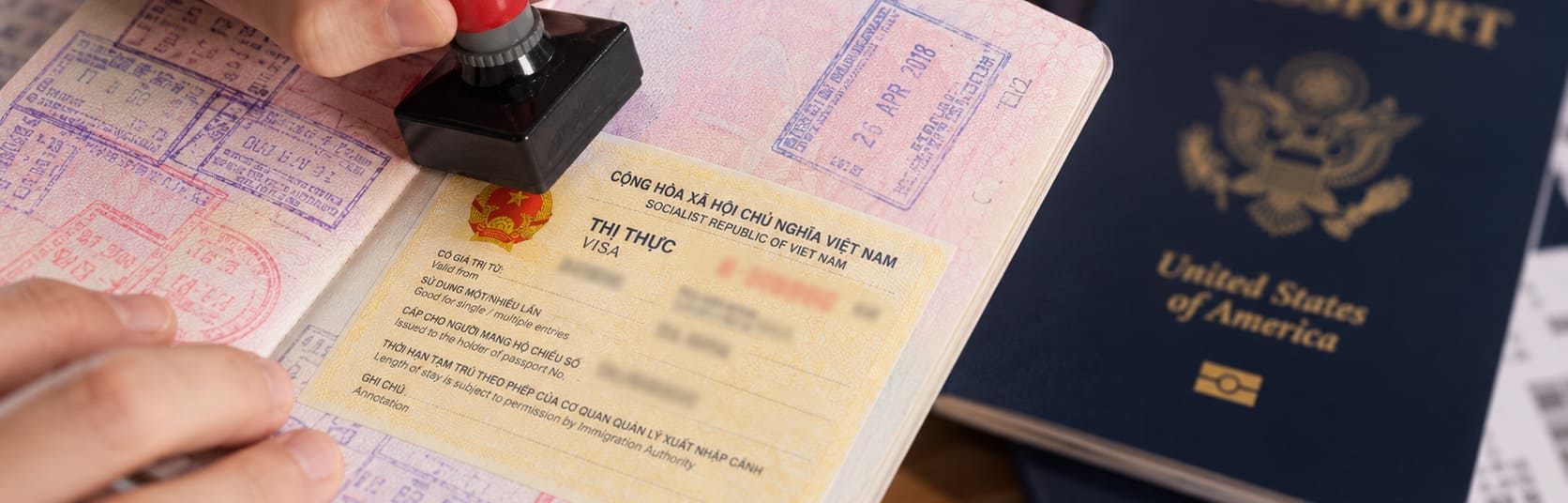
The Vietnam 90-day multiple entry e-visa allows unlimited entries into Vietnam for up to 90 days on a single application. It has existed since 15 August 2023, when Law No. 23/2023/QH15 extended the e-visa from 30 to 90 days and introduced multiple entry.
What “Multiple Entry” Actually Lets You Do
A multiple entry e-visa lets you cross Vietnam’s border in both directions as often as you need, without applying again, as long as each entry falls within the dates printed on the e-visa.
For example, with an e-visa valid from 1 March – 29 May, you could:
- Arrive in Hanoi on 1 March.
- Fly to Bangkok for a week in April.
- Return to Ho Chi Minh City and stay until the end of May.
All three movements use the same e-visa. The validity period does not pause while you are outside Vietnam, and it does not restart when you come back: it always ends on the date printed on the e-visa.
Key point: the 90 days are counted on the calendar from the start date, not as days spent inside Vietnam.
Single or Multiple Entry: Which Fits Your Trip?
Single Entry E-Visa
A single entry e-visa allows one entry into Vietnam. Once you leave the country, it can no longer be used, even if days remain on it.
It costs USD 25 in government fees and covers most standard trips, such as a two-week holiday or a single business visit where you arrive once and leave once.
Multiple Entry E-Visa
A multiple entry e-visa allows unlimited entries into Vietnam within its validity period, for USD 50 in government fees.
It is designed for travelers who plan to leave Vietnam and come back before their trip ends. Choosing it from the start saves a second application, a second fee and the risk of waiting outside the country for a new e-visa.
Who Gets the Most From It
The multiple entry e-visa is designed for travel that crosses borders. It offers the greatest value to the following groups.
- Southeast Asia itineraries: leave for Cambodia, Laos or Thailand and return without a second visa. See [Vietnam and Cambodia Visa].
- Long-stay visitors and remote workers: take a short trip abroad mid-stay without losing the visa.
- Frequent business visitors: attend several meetings or trade fairs over a few months on one visa. See [Vietnam Business Visa].
- Families visiting relatives: travel in and out several times during one visit. See [Vietnam 5-Year Visa Exemption].
Business visitors should note that working or signing employment contracts in Vietnam requires a different visa. Families who visit repeatedly over several years may find the 5-year visa exemption certificate more practical.
Multiple Entry E-Visa vs the 45-Day Visa Exemption
Citizens of 24 countries, including the United Kingdom, Germany, France, Japan and South Korea, can enter Vietnam visa-free for up to 45 days. For a short holiday with no side trips, the exemption is enough.
The multiple entry e-visa is still the better option in four situations:
- Stays longer than 45 days. The e-visa covers up to 90 days without a mid-trip exit.
- Several border crossings. Repeated re-entries on an exemption may draw questions from immigration officers. The e-visa covers every crossing within its dates.
- Business trips. The exemption under Resolution 229/NQ-CP covers tourism only, so meetings and trade fairs need a visa that matches the purpose.
- Smoother check-in. A printed visa removes any reliance on airline staff recognizing the exemption.
The full list of exempt nationalities is in Vietnam Visa Exemption.
Common Mistakes That Fail Your 90-Day Visa
Most problems with the 90-day e-visa come from the dates, not the application itself. These are the mistakes our team sees most often:
- Setting the start date too early. Days before arrival are lost. The start date should be the first day in Vietnam.
- Choosing single entry for a multi-country trip. A single entry e-visa cannot be reused after leaving Vietnam.
- Assuming the clock pauses abroad. It does not, so the whole trip must fit inside the printed dates.
- Using a border gate that does not accept e-visas. Entry can be refused. Check Vietnam eVisa Ports of Entry before travel.
- Staying past the end date. This leads to fines and may affect future entry. See Overstay Vietnam Visa.
Ways to Stay in Vietnam After the E-Visa Ends
An e-visa cannot be used after its end date. Travelers who want to stay longer need a new legal basis for their stay before that date, and there are three ways to get one.
Apply for a New E-Visa From Outside Vietnam
The traveler leaves Vietnam before the current e-visa expires and applies for a new one from outside the country. Standard processing takes about 3 working days, so the time abroad should be at least that long.
Once approved, the new e-visa allows entry through any of the 83 e-visa entry points. For tourists, this is the most reliable option.
Visa Run to a Neighboring Country
Often called a visa run, this means a short trip to Cambodia, Laos or Thailand, followed by re-entry on a new e-visa or, for eligible nationalities, a visa exemption.
Immigration officers may question travelers who repeat this often, so it works best as an occasional solution. Border crossings and practical details are covered in Vietnam Visa Run to Cambodia & Laos.
Extend or Change the Visa Inside Vietnam With a Sponsor
Foreigners with a sponsor in Vietnam, such as an employer, a local organization or a Vietnamese family member, can apply to the Immigration Department to extend their stay. They can also switch to another visa type, such as a work visa, without leaving the country.
Approval depends on the current visa and the sponsor, and each case is decided by the authorities. For details and step-by-step guidance, refer to Vietnam Visa Extension and changing Type of Visa in Vietnam.
Important: Remaining in Vietnam after the e-visa end date is an administrative violation. It leads to fines and may affect future entry.
Apply for the Multiple Entry E-Visa in 4 Steps
The application follows the same steps as a single entry e-visa:
- Enter personal details exactly as they appear in the passport.
- Upload the passport photo page and a portrait photo.
- Select “multiple entry” and set the start and end dates.
- Pay the USD 50 government fee and receive the e-visa by email.
With Simple Vietnam Visa, the service fee is shown separately from the government fee, and a specialist checks every application before submission.
Whether you are applying for the first time, dealing with an urgent situation, or unsure which visa type suits your trip. Our team is available 24/7 to assist with any visa-related query, from standard applications to emergency processing.
- Phone/WhatsApp: (+84) 856 598 868
- Email: info@simplevietnamvisa.com
Frequently Asked Questions
Yes. The e-visa can be issued for up to 90 days, single or multiple entry. Choose your start and end dates when you apply.
As many times as you like, as long as every entry falls within the validity dates printed on the e-visa.
No. An issued e-visa cannot be upgraded. You would need a new multiple entry application.

Pingback: Vietnam E-Visa Online: Get It Right the First Time – simplevietnamvisa