
Blogs
The Complete Vietnam Expat Handbook for your Travel in 2026

Vietnam is no longer just a checkbox on a Southeast Asian backpacking route, it has evolved into one of the world’s most dynamic hubs for digital nomads, slow travelers, and career expats. This definitive guide covers every practical reality you need to know before making the leap.
1. What makes Vietnam a top global choice for expats?
Vietnam consistently ranks among the most foreign-friendly countries in the world, largely thanks to the innate sociability and hospitality of the local residents. This warm welcoming culture makes it incredibly easy for newcomers to feel at home from day one.
Today, the local expat population draws from over 100 countries and territories, with significant communities from South Korea, Japan, China, Taiwan, and the United States. Most foreigners choose to settle in major economic and cultural centers, creating diverse, multicultural networks that offer a fantastic support system for anyone transitioning to life here.
2. Vietnam climate breakdown by region
Located in a tropical monsoon zone, Vietnam offers surprisingly diverse weather patterns depending on where you choose to pitch your tent:
- The North (Hanoi): Features distinct seasonal shifts. You will experience cold, dry winters from November to April, and hot, humid, rainy summers from May to October.
- The Central Region (Da Nang): Experiences hot, dry weather for the first half of the year before transitioning into a cool, rainy season from September to December, with heavy monsoon peaks in October and November.
- The South (Ho Chi Minh City): Is the perfect base if you prefer consistent warmth. The temperature stays balmy year-round, divided simply into a rainy season (May to November) and a dry season (November to May).
3. Vietnam’s Currency, Language & Traffic
Navigating the daily essentials during your first week can be an adventure, but keeping these three elements in mind will help you settle in quickly:
Currency & Cash
The official currency is the Vietnamese Dong (VND). While small denominations (VND 1,000, 2,000, and 5,000) are printed on cotton paper, all larger notes are durable polymer. US Dollars are accepted at major hotels and boutique services, but carrying local cash is essential for daily street transactions.
Language & Communication
Because Vietnamese uses a Latin-based alphabet, navigating street signs, maps, and menus is highly intuitive. English is the most widely spoken foreign language among the younger generation in urban centers, followed by Japanese, Korean, and Chinese.
Traffic
The sheer volume of motorbikes can cause immediate culture shock. To navigate the roads safely without the stress of driving, most expats heavily rely on ride-hailing apps like Grab and Be. If you want to drive independently, you must legally convert your home country’s paperwork into a local Vietnamese license.
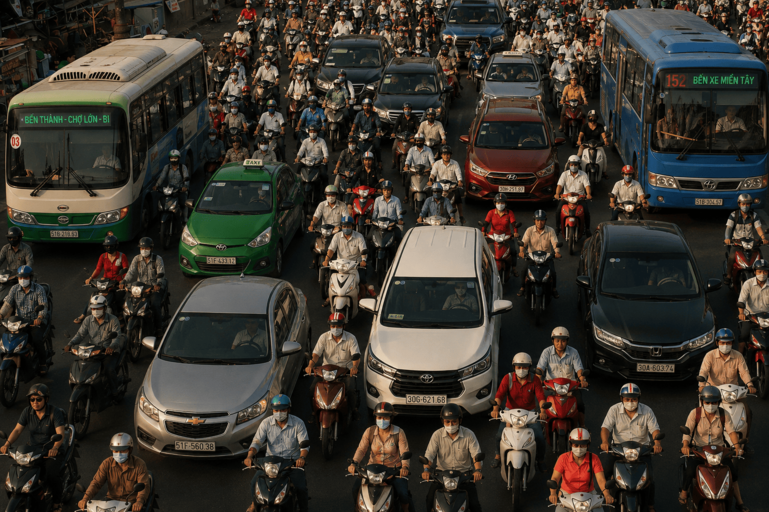
Vietnamese people mainly use cars, motorcycles, and public transportation.
4. Expat-friendly places to live
Finding the right neighborhood is key to enjoying your time in Vietnam. Expats generally flock to a few well-established areas:
- Hanoi: The scenic West Lake (Tay Ho) area is the ultimate expat enclave, famous for its lakeside cafes and western amenities.
- Ho Chi Minh City: Binh Thanh District and Thao Dien (District 2) offer a bustling mix of modern luxury apartments and vibrant street life.
- Coastal Cities: If you prefer a slower pace, cities like Da Nang and Nha Trang provide a relaxed beach lifestyle with less hustle and bustle.
Housing options range from budget-friendly homestays to fully equipped serviced apartments, starting from USD 300 to USD 400 per month for cozy studio spaces. Working with a local real estate agent can save immense time, filter the best properties, and protect you from common rental traps.
5. Legal requirements
The 90-day E-visa
Ideal for temporary stays or trial runs, the standard 90-day e-visa provides an excellent window to explore the country. However, keeping strict track of your calendar is mandatory.
⚠️ Important Note: Staying even a single day past your permitted duration violates local immigration laws. If you accidentally miss your exit date, consult our comprehensive Vietnam visa overstay guide immediately to understand the exact administrative fines and resolution steps.
Work permits & TRCs
If you plan to work legally for a local enterprise, securing a 2-Year Work Permit is compulsory. This document serves as the foundation to apply for a Temporary Residence Card (TRC), allowing you and your dependents to live in the country long-term without continuous visa renewals.
The 5-year visa exemption
For overseas Vietnamese and their immediate foreign family members, navigating short-term visas every few months is completely unnecessary. You can easily bypass standard tourist restrictions by applying for a long-term travel document. Read our definitiveVietnam 5-year visa exemption guide to find out how to secure unlimited multiple entries and stays of up to 180 days per visit.
6. Healthcare & Education
Medical care
While public medical facilities are constantly improving, expats heavily favor private international hospitals in major cities. These facilities feature English-speaking medical staff, modern equipment, and direct billing options for international health insurance plans, minimizing language barriers during emergencies.
Schooling for expat kids
Expat families rarely choose local public schools due to language hurdles and rigid traditional teaching methods. Instead, they opt for private or international schools that offer dynamic, experiential learning, though these come with premium tuition fees and competitive waiting lists.
7. Is Vietnam right for you?
Living in Vietnam offers an incredible quality of life at an affordable cost, often 40% to 60% lower than in Western nations. Over 90% of expats agree that their household income is more than enough to lead a comfortable life here. From the world-class street food culture to excellent regional travel connections through 12 international airports, your budget stretches remarkably far.
However, no destination is without its flaws. To truly thrive here, you must learn to tolerate chaotic traffic rush hours, occasional dual-pricing standards at local tourist markets, and complex administrative bureaucracy.
Frequently Asked Questions
Vietnam is an ideal destination not only for tourists thanks to its amazing natural landscapes, pleasant climate, and rich culture but also for foreigners to live and work in Vietnam thanks to residents’ sociability and hospitality.
When traveling in Vietnam, you must be careful with the chaotic traffic, scams involving unlicensed street vendors and taxis, and strict local laws.
