
Blogs
The Story of Vietnam’s Traditional Dress
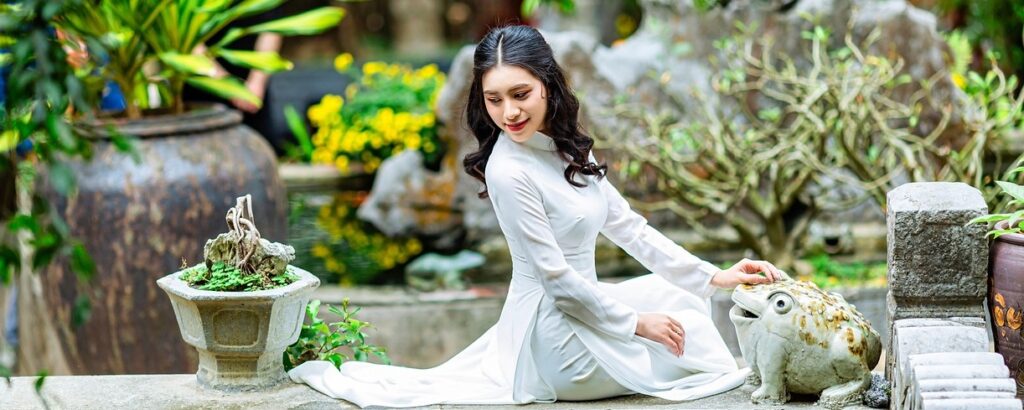
For many international visitors, the Ao Dai is often their first introduction to Vietnamese fashion and tradition.
What is ao dai?
The term “Ao Dai” literally means “long garment” in Vietnamese. The tunic is usually tailored close to the body and features side slits that begin around the waist, allowing the front and back panels to flow freely while walking.
What makes the Vietnamese Ao Dai unique is its ability to combine tradition and practicality. Unlike many traditional costumes around the world that are only worn during historical reenactments or cultural exhibitions, the Ao Dai continues to be worn by ordinary people during important moments in their lives.
Different types of ao dai
Ao giao linh
Considered one of the earliest forms of traditional Vietnamese clothing. Giao linh is recognizable by its crossed collar and loose silhouette, it was commonly worn with a black skirt and reflected the everyday lifestyle of Vietnamese people centuries ago.
Ao tu than
Tu Than became closely associated with women in northern Vietnam, especially in rural communities. Its four-panel design appeared frequently in folk culture, traditional festivals, and images of village life that remain familiar to many Vietnamese people today.
Ao ngu than
The Ao Ngu Than marked an important stage in the development of Vietnamese dress. With its five-panel structure and standing collar, it was widely worn by both men and women and is often regarded as the direct predecessor of the modern Ao Dai.
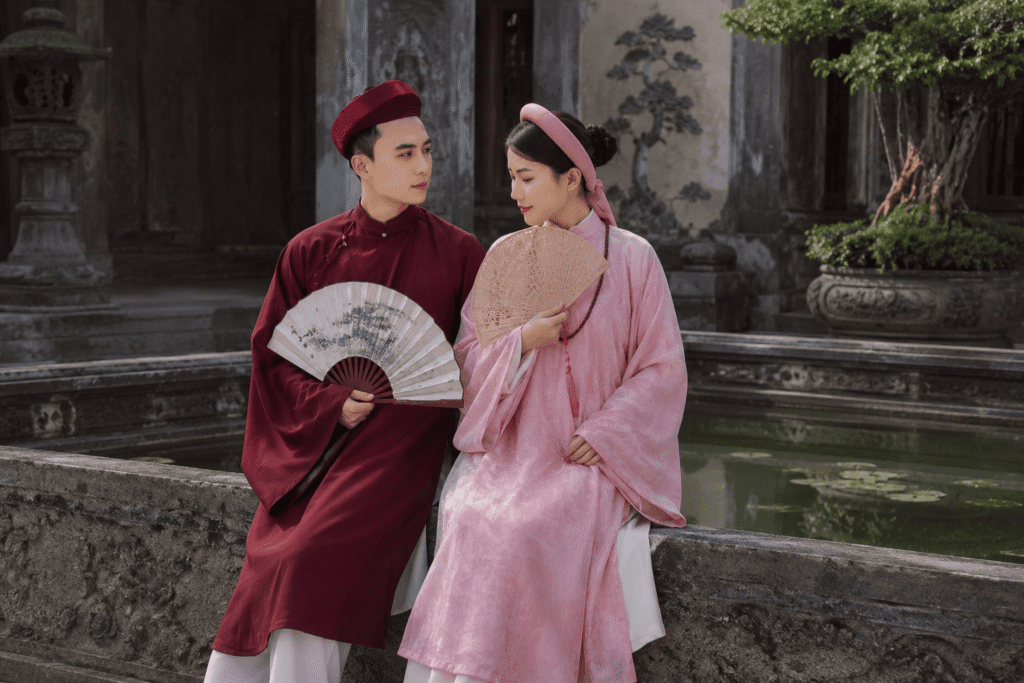
The elegant ao dai ngu than, a symbol of Vietnamese cultural heritage
Lemur ao dai
In the 1930s, designer Cat Tuong introduced the Lemur Ao Dai, bringing a more refined and contemporary look to Vietnamese fashion. Its elegant silhouette helped transform the Ao Dai into a garment that balanced tradition with modern aesthetics.
Le Pho ao dai
The Le Pho Ao Dai further refined this evolution by emphasizing simplicity and elegance. The design gained popularity for its graceful appearance and played a major role in shaping the image of the Vietnamese Ao Dai that many people recognize today.
Raglan ao dai
Introduced in the 1960s, the Raglan Ao Dai featured a new sleeve construction that improved comfort and fit. The design quickly became a favorite among tailors and remains one of the most commonly used styles in modern Ao Dai making.
Ao dai cach tan
As fashion trends evolved, designers began creating more versatile versions of the Ao Dai. Known as Ao Dai Cach Tan, these designs often feature shorter panels, relaxed silhouettes, and contemporary styling, making them popular for Tet celebrations and casual occasions.
Modern ao dai
Today’s Ao Dai continues to evolve while preserving its distinctive identity. Whether designed with minimalist elegance or modern creative details, it remains one of the strongest symbols of Vietnamese culture and heritage.
When do Vietnamese people wear ao dai?
One of the most common occasions is Tet, the Vietnamese Lunar New Year. Families often wear Ao Dai while visiting relatives, attending temple ceremonies, and taking family photographs.
Traditional wedding ceremonies frequently feature Ao Dai for both the bride and groom, as well as parents and close family members.
Students wear Ao Dai during graduation ceremonies, special school events, and important celebrations.
The garment is also commonly worn at cultural festivals, artistic performances, diplomatic functions, and formal gatherings where Vietnamese heritage is being celebrated.
Unlike purely ceremonial costumes, the Ao Dai remains integrated into contemporary life.
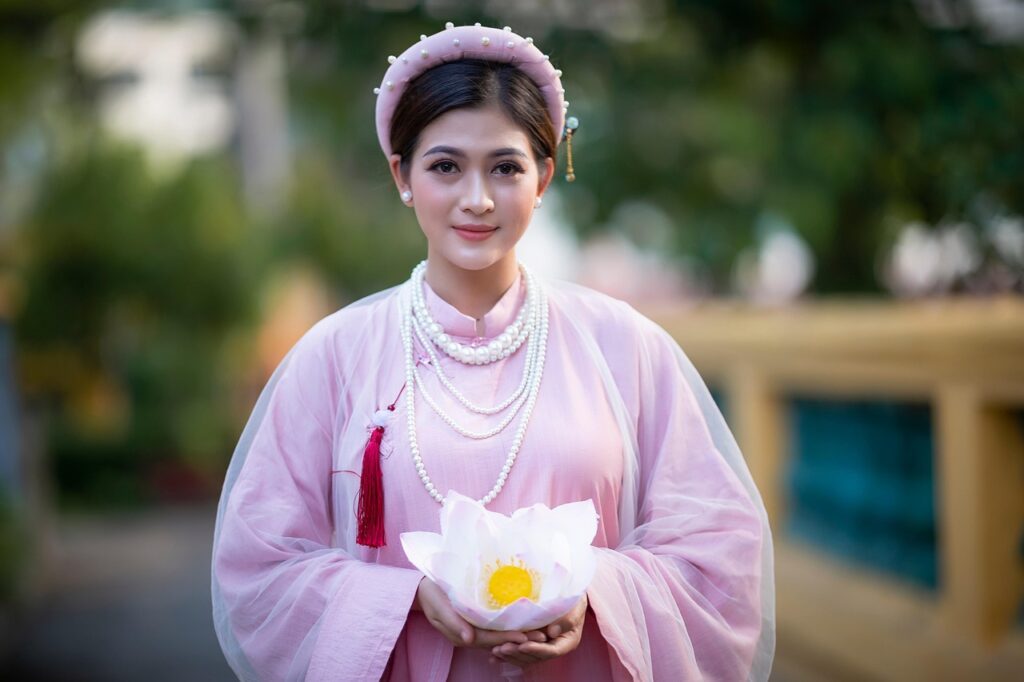
The traditional ao dai, a formal attire elegantly worn during national celebrations
How to get your own ao dai
Ready-made designs can be found in clothing stores throughout major cities such as Hanoi, Hue, and Ho Chi Minh City. These garments are convenient for travelers who want a traditional outfit without waiting for custom tailoring.
For a custom-made Ao Dai, a tailor can adjust the length, shoulder width, waistline, and overall silhouette to suit the wearer perfectly.
That balance between tradition and modernity may be the reason the Ao Dai continues to thrive.
Whether you are applying for the first time, dealing with an urgent situation, or unsure which visa type suits your trip. Our team is available 24/7 to assist with any visa-related query, from standard applications to emergency processing.
- Phone/WhatsApp: (+84) 856 598 868
- Email: info@simplevietnamvisa.com
